Want to do research? Contact Me!
Current Projects
- NASA – Education, Data and Geosciences in Environmental Justice (EDGE) Institute. North Carolina Central University, University of Puerto Rico at Arecibo, University of Alabama in Huntsville.
- LIT-GEO Proyects: Research Post-Bachelor Program of Geoscience Applied to the Community.
- First Year (2024) – Comprised of three geoscience research projects for the community (sinkhole flood management, water quality of Caño Tiburones, and the characterization of fungi in caves).
- Second Year (2025) – Presented the results of all three projects in two occasions and now in March students presented in the SouthEast Geological Society of American Regional Meeting. Currently the LIT-GEO Intercultural Summit is being celebrated in UPRA.
- Detection of microplastics in the Tallonal Cave at Arecibo.
- Paleontological Study of on Loose Sediments in Estancita Cave, Cabachuelas.
- Simulation of real caves utilizing Unreal Engine.
- Characterization of Rare Speleothems: Retaking the Conversation over the Formation of Shields.
Recent Articles Published
The Fear of Halley’s Comet Visit in 1910 is Preserved in a Cave in Southern Puerto Rico
Abstract
This paper explores a unique cave art found in southern Puerto Rico that depicts a comet over a tomb. Through interdisciplinary methods, including art interpretation, historical documentation, and demographic analysis, this study uncovered the artist’s identity, the societal context of the period, and the potential motivations behind the creation of this art. The investigation revealed a connection to the passage of Halley’s Comet in 1910 and the widespread panic it induced.
Detection of microplastics in Cueva Tallonal at Arecibo, Puerto Rico
Abstract
Microplastics are a serious environmental problem that has percolated through the karst ending up in caves and aquifers a!ecting the water quality and damaging the habitat of some organisms. However, the study of microplastics on karts has been limited for di!erent reasons. This study aims to detect the presence of microplastics at Cueva Tallonal in Arecibo, Puerto Rico. We conduct this research by adapting the methodology of other’s previous work on caves. To perform the study, we collected and processed water and sediment samples in the laboratory. The water sample was directly filtered, and the sediment sample was processed through density separation before the filtration. The suspicious particles were observed and visually analyzed by a digital microscope to classify the particles by aspect. Some suspicious particles with the morphology of microplastics were found in the cave, which have limited access. Interestingly, the locations they were found contradicts previous works in other caves. Our results showed that we were able to identify some suspicious particles in a restricted access cave that correspond to microplastics cubes and fiber cloths.
Marginal Navigation in Colonial Puerto Rico: The Case of the Canoe of Mayagüez
Empowering communities through Citizen Science. Dr. Angel García & Ángel A. Acosta Colón. Journal In the Trenches of the Association of Geosciences Teachers. (https://nagt.org/nagt/publications/trenches/v14/april_2024.html).
Post Related to Prof. Acosta
- Undergraduate Research and Creation Symposium (2026)
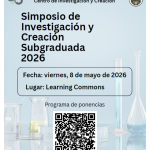 Presentations at the 2026 Undergraduate Research and Creation Symposium by students and professors from the Department of Physics and Chemistry. Project 01: Investigating Microplastics in Fresh and Canned Octopus by Julián Alvarado Pagán, Josué Cuevas Soto, Alanys Rodríguez Matos, Zoelie González Escoriaza, Jamelis Santiago Díaz, Mentora: Maiella Ramos Project 02: 3D Visualization of the Rock… Read more: Undergraduate Research and Creation Symposium (2026)
 - Prof. Acosta and CIIN-3004, ASTR-3015, and FISI-4985 Visit The Museum of Natural History of Puerto Rico
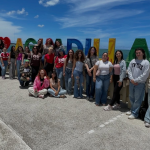 Today, students from Prof. Angel Acosta visit the Puerto Rico Museum of Natural History.
 - Students Carlos, Reinaldo, Gabriela, and Kenneth Present Research in JTM (2026) at UPR Rio Piedras
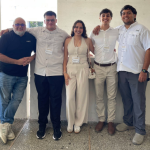 Students from Professor Angel Acosta’s research course participated in the Junior Technical Meeting at UPR Río Piedras, where they presented the results of their karst and cave research group. The students that presented their research are Carlos Delgado Vera, Reinaldo Morales Ferndandez, Gabriela Alonso Gonzalez, and Kenneth Cruz Mendoza.
 - Prof. Acosta and his Research Students with the Norman Veve Troglodyte Cave Group gives Cave Tours to UPRA Honor Students
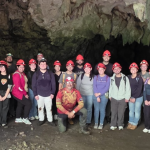 Prof. Acosta and research group with the Norman Veve Troglodyte Cave Group guided UPRA students in coordination with Prof. Diaz to learn about the importance of caves and karst.
 - Workshop: Geology and Tectonic Plates
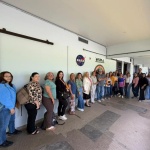 Teachers explored the geosciences and the tectonic plates.
 - Prof. Acosta Special Guest for the Carribean Geology and Ecology Course of the James Madison University
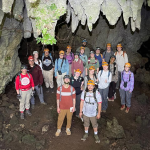 Prof. Acosta toured students and Dr. Garcia and Dr. Reider from the James Madison University on various locations in the northern karst region of PR.
 - Prof. Acosta as Guest Speaker at the Main Plenary Session of the 72nd TriBeta Biology Honor Society District Convention
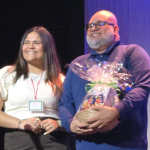 Prof. Acosta gave speech at the 72nd TriBeta Biology Honor Society District Convention in Ponce.
 - Students from the Agnes Scott College Visit UPRA’s ISMuL-AEL, Library and Cabachuela’s Reserve
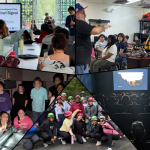 Dr. Nery, Prof. Mendez, Prof. Acosta received students from the Agnes Scott College at the UPRA.
 - Prof. Acosta Teaches About Matlab and Simulink
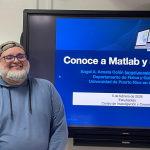 Prof. Angel Acosta taught students and faculty what Matlab is and how to access it with the UPRA-based licence. During the workshop Prof. Acosta informed the different areas where Matlab can be utilized based on the different toolboxes that are available. Also, the Professor showed how to use the program with the online Matlab servers… Read more: Prof. Acosta Teaches About Matlab and Simulink
 - Prof. Acosta Informs Students of the UPR at Rio Piedras About Research Projects and Karst
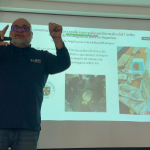 Prof. Acosta gave a speech to students of the UPR at Rio Piedras on his research projects and the challenges of climate change in the Karst.